
Part 2: The Child Who Never Saw The Sky
How long does it take to forget the surface?

In Part 1: The Hidden Humanity Hypothesis, I explored a simple possibility.
What if a population survived an ancient catastrophe by retreating underground while civilisation on the surface collapsed and eventually rebuilt itself?
Whether that ever happened is another question entirely. What interests me here is not the catastrophe itself, but what happens afterwards.
Imagine two children born into the same civilisation.
They speak the same language. They inherit the same culture. Their parents tell them the same stories. They grow up with the same customs, the same beliefs and the same understanding of the world.
Now imagine that something separates them.
One child remains part of the civilisation we recognise from history. Their descendants continue living on the surface, rebuilding towns and cities, trading with neighbouring populations and gradually creating the world that eventually becomes our own.
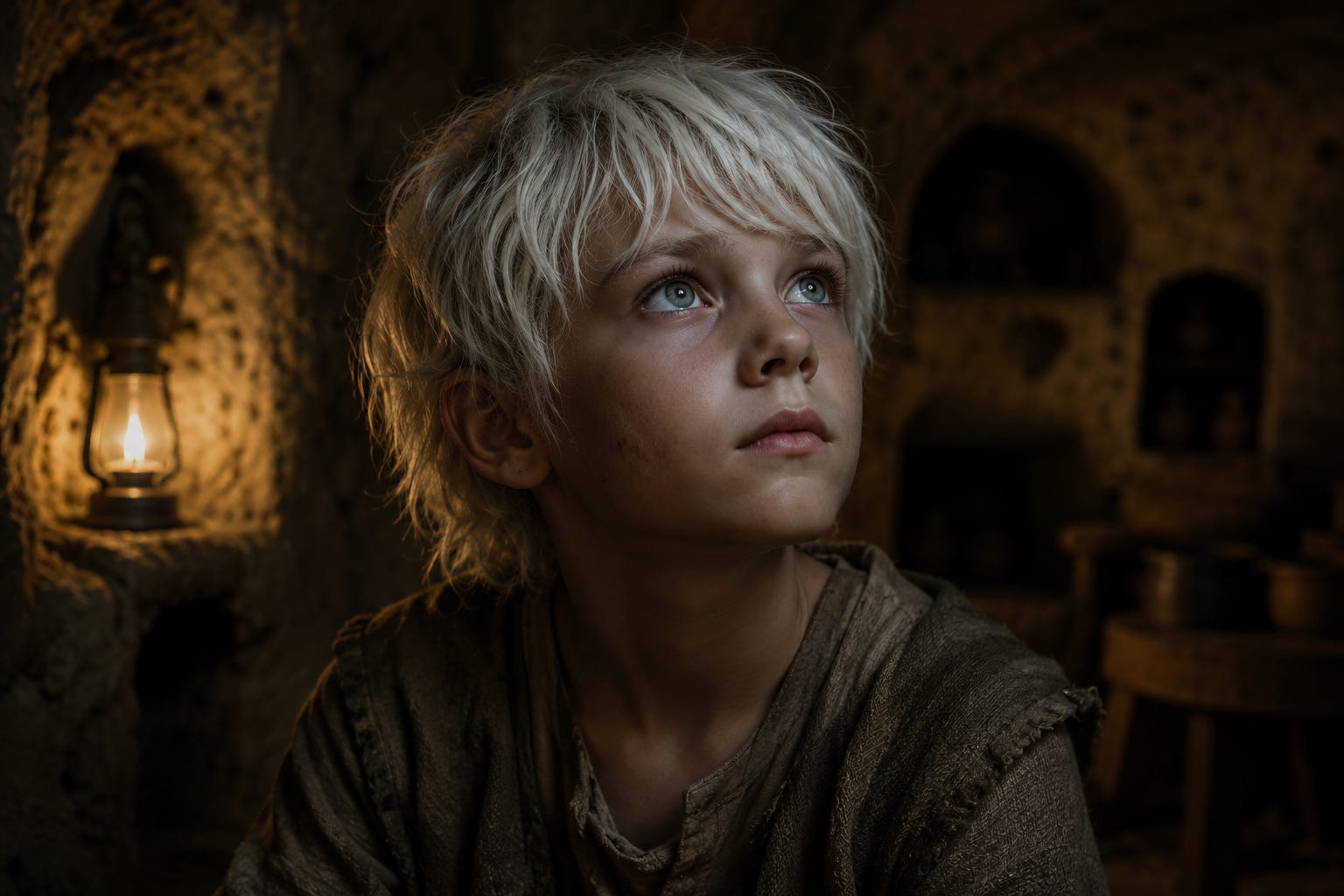
The other enters a protected underground refuge with a small group of survivors.
At first, the difference is almost meaningless. The adults remember the world above. They remember the sky, the seasons, the landscapes and the lives they left behind. They still think of themselves as belonging to the same civilisation as everyone else.
But the children born underground would inherit something different.
Not memory.
Story.
To them, the surface is not home. It is something their parents describe.
By the second generation, those stories begin to change. By the third, details are forgotten. By the fourth, the surface may feel less like a place and more like a distant chapter in history.
This is not unusual.
Human beings have always changed when separated from one another. Languages drift. Customs evolve. Beliefs adapt. Priorities shift. Communities develop their own identities, often much faster than we expect.
We do not need to look thousands of years into the past to see examples of this process. We can observe it throughout history and even in the modern world.
Populations separated by geography, politics, religion or culture often begin diverging within a surprisingly short period of time. Sometimes the differences are subtle. Sometimes they become so profound that people who once shared a common origin eventually struggle to understand one another at all.
The Hidden Humanity Hypothesis rests on a deceptively simple question.
If ordinary human populations can become noticeably different after a few centuries of separation, what happens after a thousand years?
What happens after two thousand?
At what point does a refuge stop being a refuge and become a civilisation in its own right?
And at what point does that civilisation stop thinking of itself as part of the world it left behind?
Different Problems Create Different People
One of the assumptions hidden within most discussions about civilisation is that progress follows a single path. We tend to imagine that given enough time, every society will eventually discover the same technologies, build the same institutions and arrive at roughly the same destination.
History doesn’t really support that view.
Civilisations are shaped by the problems they need to solve. A society built around maritime trade develops differently from one organised around agriculture. Mountain communities often think differently from people living on open plains. Even today, populations sharing similar levels of technology can hold radically different values, priorities and assumptions about how the world should work.
Environment matters because it determines which problems demand attention and which skills are rewarded.
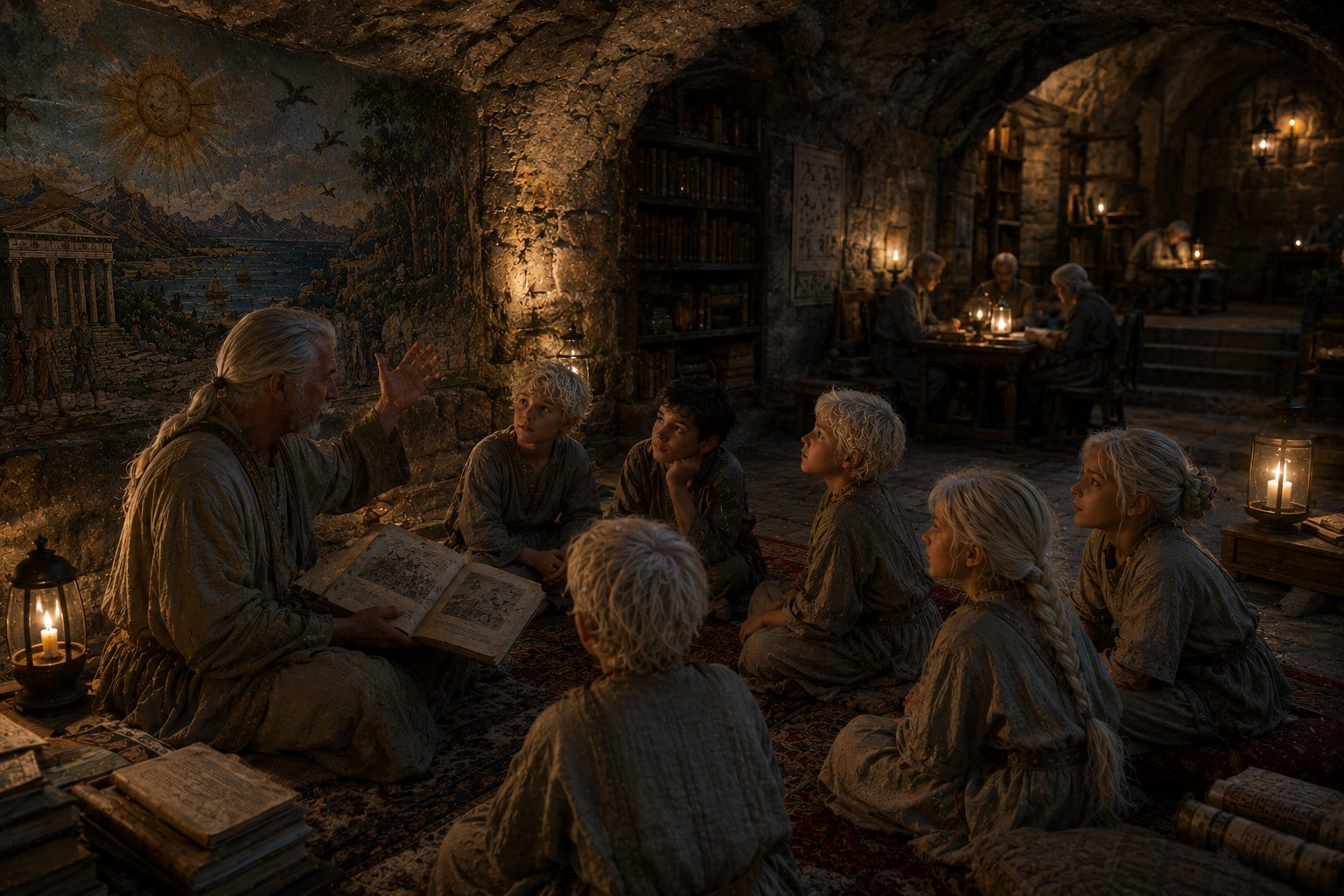
If the Hidden Humanity Hypothesis contains even a grain of truth, then an underground civilisation would not simply be a surface civilisation living beneath the ground. Over time, it would become something distinct because it would spend centuries responding to a completely different set of pressures.
The people rebuilding on the surface would still be dealing with many of the challenges that shaped human history as we know it. Territory, trade, agriculture, competition and conflict would continue to influence the development of their societies. Expansion would remain possible. New land could be settled. Resources could be acquired. If one region became difficult to inhabit, another might offer opportunity.
Life underground would impose different constraints.
A closed environment changes the nature of survival. Space is limited. Resources are finite. Air, water and food become part of a carefully managed system rather than something that can be taken for granted. Decisions that might be inconvenient on the surface could become existential underground. A contaminated water supply, a disease outbreak or a critical engineering failure would affect everyone.
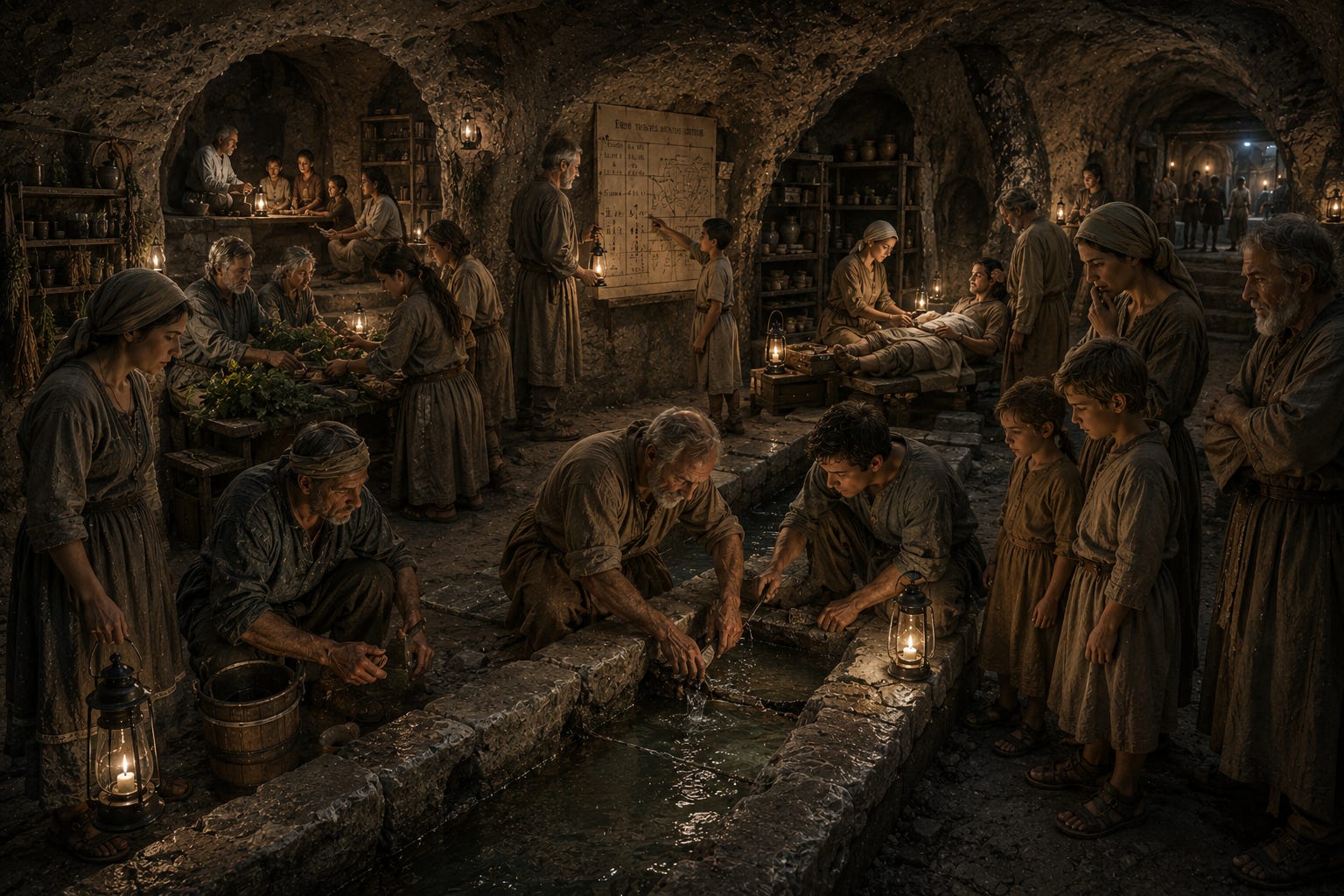
Over generations, those pressures would begin to influence the direction of development. Medicine might become a higher priority than warfare. Biological sciences might attract more attention than territorial expansion. Engineering would focus on maintaining stable environments rather than building larger empires. Long-term planning would become less of an ideal and more of a necessity.
None of this requires one population to be smarter than the other. It simply reflects the fact that people adapt to the conditions they live in.
What interests me is how quickly those differences could accumulate. Two populations might begin with the same language, the same myths and the same understanding of the world. A thousand years later, they could still be recognisably human while possessing entirely different assumptions about what matters, what is valuable and what a successful civilisation looks like.
The cities themselves are not really the point. They are simply the mechanism that creates the separation.
The more interesting question is what happens to the people once that separation begins.
The Child Born Underground
This is where the thought experiment becomes more intimate.
It is easy to talk about civilisations in the abstract. It is harder to think about the individuals living inside them.
Imagine a child born underground three hundred years after the original catastrophe.
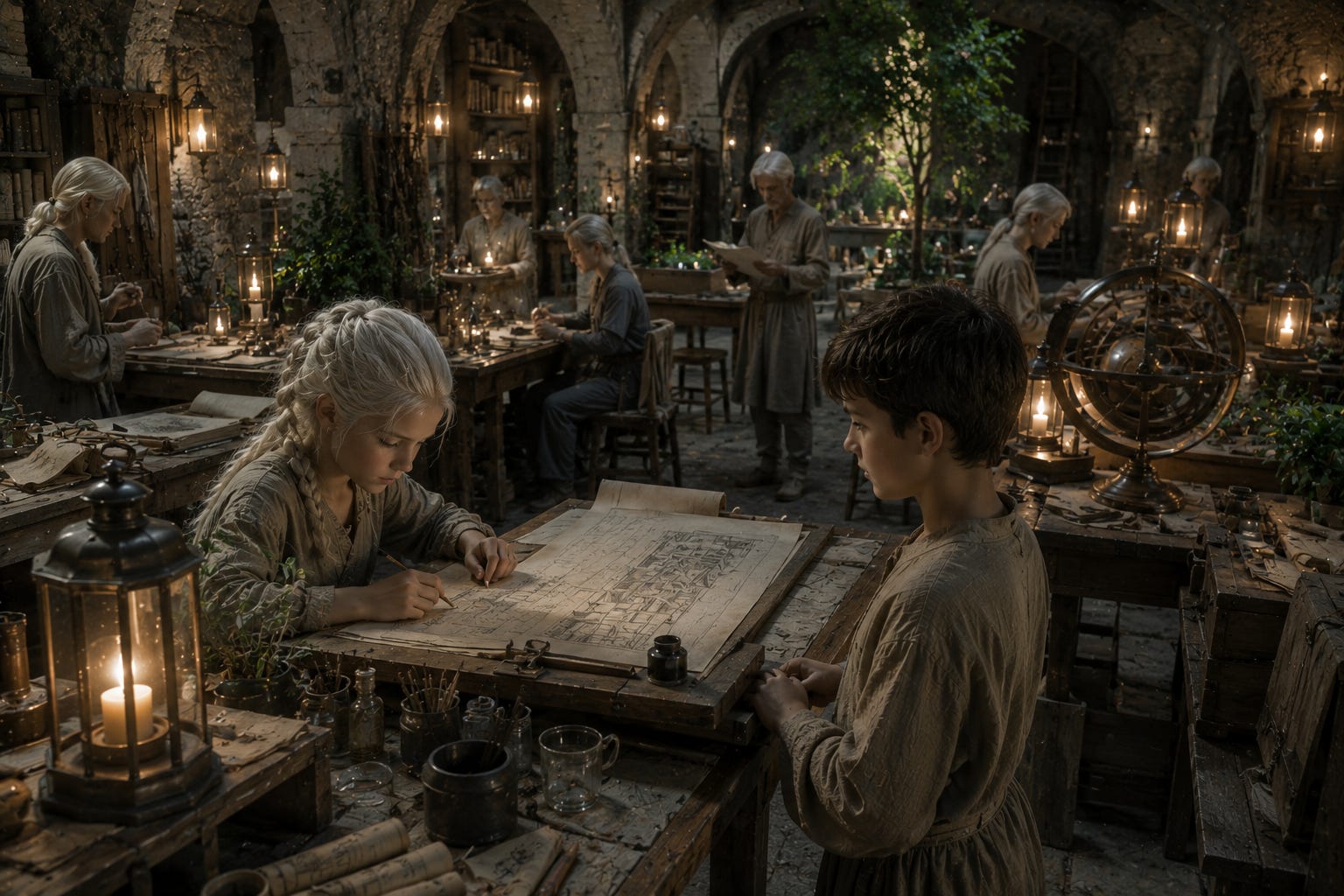
The world above still exists, but it is no longer part of daily life. They have never stood beneath an open sky, watched a sunset or seen the ocean, a forest or a mountain range.
The surface exists only as stories.
Their grandparents may have heard accounts passed down from earlier generations. Their parents may have grown up learning about the world above. But for the child, those places are as distant as Ancient Rome is to us. They belong to history rather than lived experience.
That distinction matters because memory changes as it moves through generations. The first generation remembers. The second generation inherits memories. The third generation inherits stories. Eventually, those stories become culture.
The underground refuge is no longer viewed as temporary. It is no longer a place people are waiting to leave. It becomes home. The tunnels, chambers and artificial environments that once existed to preserve a civilisation gradually become the civilisation itself.
The people living there would not think of themselves as survivors.
They would simply think of themselves as normal.
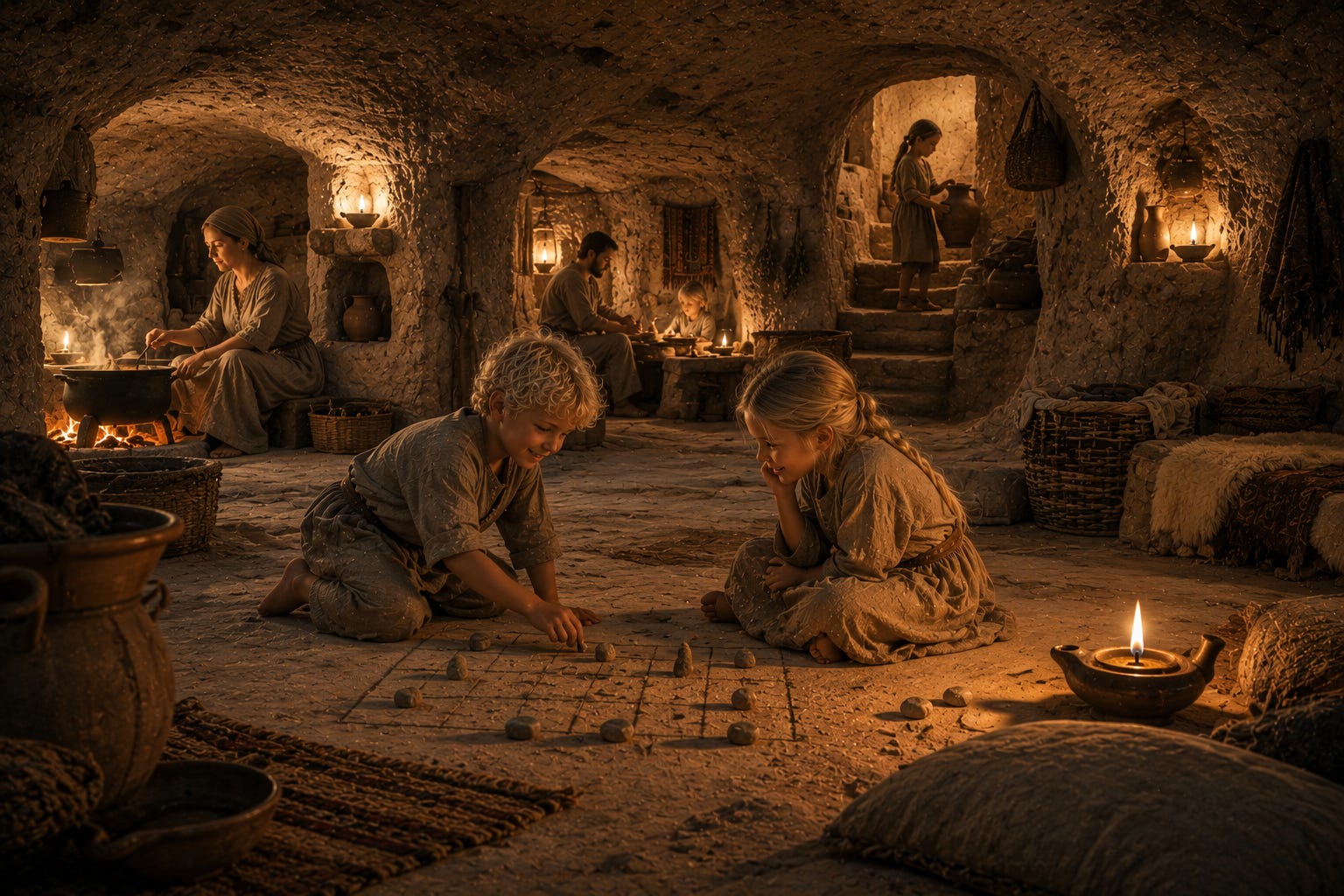
That is something we often overlook when imagining hidden populations. We instinctively project our own perspective onto them. We imagine people longing for the surface, dreaming of escape and viewing their underground existence as an abnormal condition.
But why would they?
Most of us rarely question the world we are born into. We accept it as reality because it is the only reality we have ever known. A child born underground might find the surface just as strange as we would find their world.
The idea of living beneath an endless sky, exposed to weather, disease, conflict and environmental instability, might seem reckless rather than liberating. The vastness of the surface could feel intimidating. The noise, unpredictability and constant movement of modern civilisation might appear chaotic compared with the highly managed environments they were accustomed to.
In other words, divergence would not only occur in technology or culture. It would occur in perception.
The same world begins to look different depending on where you stand. What one civilisation sees as freedom, another might see as vulnerability. What one civilisation sees as progress, another might see as unnecessary risk.
After enough time, the separation stops being merely geographical. It becomes psychological.
Once that happens, the distance between two populations can become far greater than the physical distance separating them.
Different Civilisations Optimise For Different Things
One of the things I find most interesting about this thought experiment is that it doesn’t require anyone to become superhuman.
The hidden civilisation doesn’t need to be wiser than us, more ethical than us or dramatically more intelligent than us.
It simply needs to spend a long period of time solving different problems.
Much of human history has been shaped by abundance and expansion. Civilisations rise beside rivers, coastlines and fertile plains. When populations grow, they spread outward. When resources become scarce, they look elsewhere. When neighbouring groups compete for territory, warfare often follows. Entire empires have been built on the assumption that growth is both possible and desirable.
An underground civilisation would not have that luxury.
Expansion would be difficult. Resources would be finite. Every major decision would have consequences that could echo through generations. The challenges facing such a society would not revolve around conquering new territory or controlling trade routes. They would revolve around maintaining stability within a closed system.
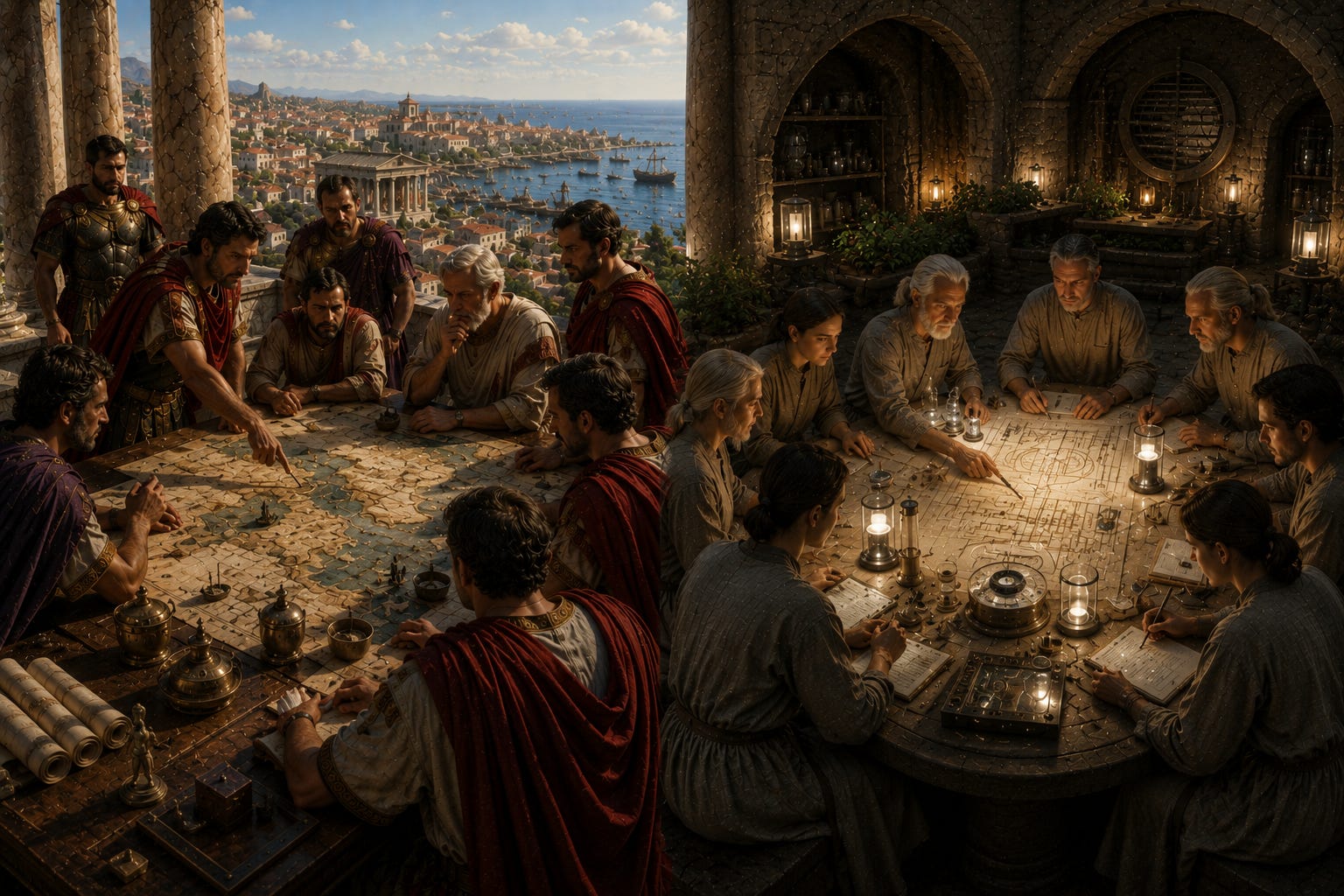
That distinction sounds subtle, but I suspect it would have profound consequences.
Imagine two civilisations beginning with identical knowledge and technology. One spends the next thousand years competing with neighbouring states, fighting wars, building empires and expanding across continents. The other spends the same thousand years trying to maintain a stable population, preserve resources and ensure the long-term survival of a confined community.
Even if both groups started from exactly the same place, they would almost certainly end up prioritising different forms of knowledge.
The surface civilisation might invest heavily in transportation, agriculture, manufacturing and military technology because those things directly influence its ability to compete and expand. The underground civilisation might find itself placing greater emphasis on medicine, biology, engineering and environmental management because failures in those areas threaten the survival of everyone.
Neither path is inherently better.
They are simply responses to different realities.
This is one reason I struggle with the idea that technological progress follows a universal roadmap. We often assume that every advanced civilisation would end up looking broadly similar because intelligence inevitably leads to the same discoveries. Yet even within modern humanity we can see how different priorities shape different outcomes.
If an underground civilisation existed for long enough, I suspect its institutions would gradually begin reflecting the pressures of its environment. Education, governance, scientific research and even cultural values would evolve around the problems that mattered most to daily survival.
Over time, those priorities would become normal. People would stop seeing them as adaptations and start seeing them as common sense.
That may be the most important point of all.
The people living within such a civilisation would not feel unusual. They would not wake each morning thinking of themselves as descendants of catastrophe survivors. Their way of life would simply be reality.
If that reality persisted for centuries or millennia, certain fields of knowledge would probably become far more important than they are on the surface. Medicine, biology, engineering and environmental management would not be specialist concerns sitting at the edge of society. They would be central to survival.
Yet the longer I followed this line of reasoning, the more I realised that knowledge alone would not be enough.
Every civilisation ultimately lives within constraints.
Surface societies have often responded to pressure by expanding outward. New land can be settled. New resources can be acquired. New opportunities can be created. When one region becomes crowded, unstable or depleted, another may offer a temporary release valve.
An underground civilisation would have far fewer options. Its world would be finite. Its resources would be finite. Its margin for error would be finite.
That raises a more fundamental question.
Even if such a civilisation developed its own culture, institutions and way of life, could it actually survive for centuries or millennia within the limits of a closed system?
That is the question we’ll explore next.