
Part 3: The Constraint Problem
The Price of Survival

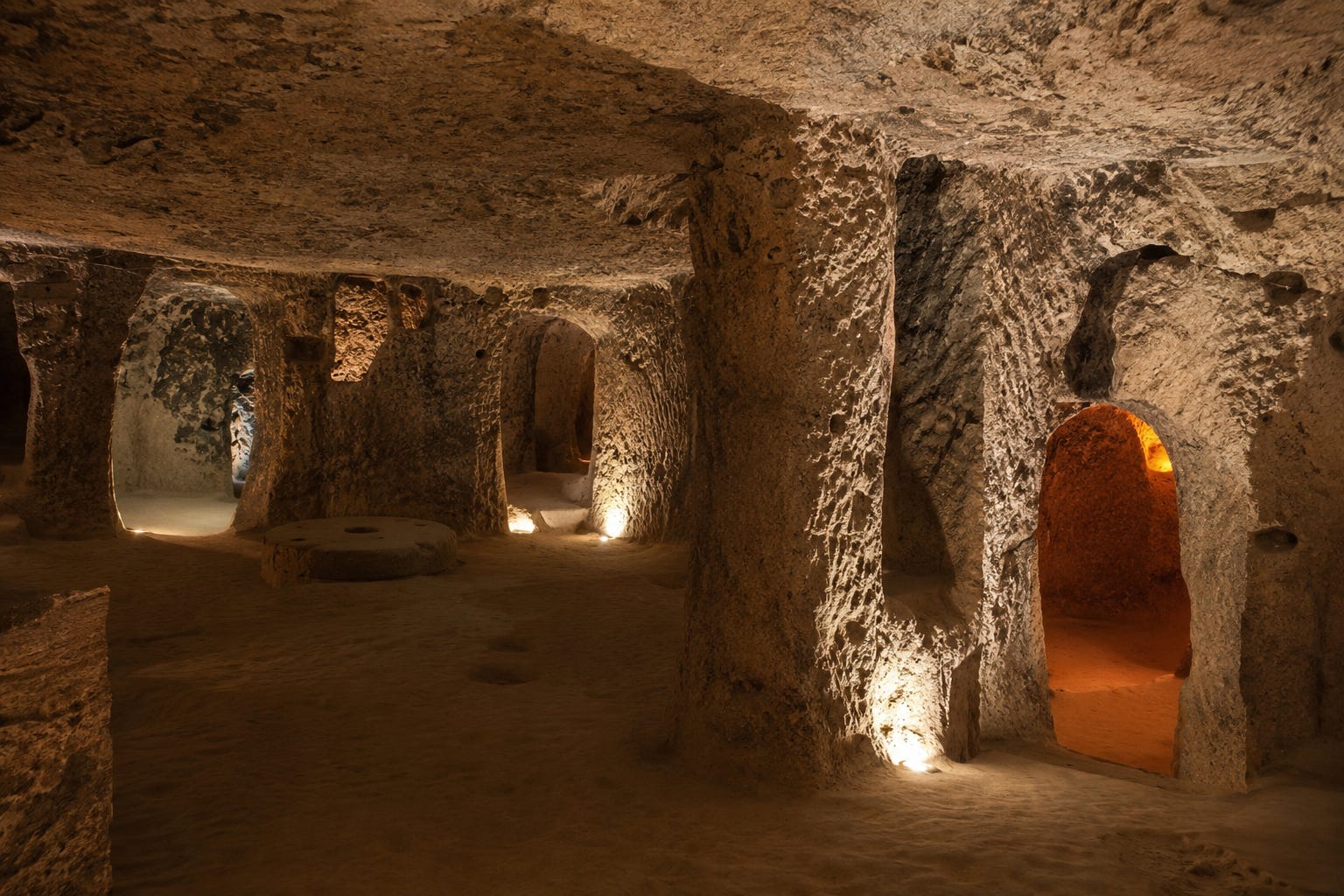
In Part 2: The Child Who Never Saw The Sky, I explored the idea that two human populations separated for a sufficiently long period of time would gradually begin to diverge. Different environments create different pressures, and different pressures create different priorities. Given enough time, those priorities become institutions, values and technologies. What begins as a single civilisation eventually becomes two.
That is the relatively straightforward part of the thought experiment.
The more difficult question is whether such a civilisation could survive in the first place.
One of the assumptions hidden within the Hidden Humanity Hypothesis is that surviving underground would naturally lead to long-term success. The more I thought about it, the less convinced I became. Surviving a catastrophe and building a civilisation are very different challenges. A population might endure underground for months, years or even generations if it is sufficiently prepared, but survival alone does not guarantee growth, adaptation or long-term stability.
The moment a temporary refuge becomes a permanent settlement, an entirely new set of problems emerges.
Most surface civilisations operate within what is effectively an open system. When populations grow, they expand. When resources become scarce, they seek alternatives. Throughout history, pressure has often been relieved through movement. New farmland is cultivated, new settlements are established, trade routes are opened and territories change hands. Humanity’s default response to many challenges has been expansion.
An underground civilisation would not have that option.
Every chamber would have a finite capacity. Every water source would have a limited output. Every food-producing area would have a maximum yield. Ventilation systems, waste systems and living quarters would all have hard limits that could not simply be ignored. Every improvement would consume space, labour, energy or resources that could no longer be allocated elsewhere.
At first glance, this might not seem particularly unusual. After all, every civilisation operates within limits of some kind. What makes an underground civilisation different is that those limits become impossible to escape. There is no distant valley waiting to be settled, no unexplored continent beyond the horizon and no frontier capable of absorbing excess pressure. Everything exists within the system.
The more I followed this line of reasoning, the more I found myself wondering whether the defining characteristic of a hidden civilisation would not be its technology, secrecy or longevity, but its relationship with constraints.
Surface societies often solve problems by expanding outward. An underground civilisation would be forced to solve problems by becoming more efficient. That may sound like a subtle distinction, but I suspect it would change almost everything.
The Human Solution
One of the assumptions people often make when imagining a long-term underground civilisation is that the people themselves would gradually adapt to the environment around them.
At first glance, that seems perfectly reasonable. Caves are dark, space is limited, temperatures differ from those on the surface and the overall environment is fundamentally unlike the one in which humans evolved. Given enough time, it feels natural to assume that the population would begin to change in response.
The more I thought about it, however, the less convinced I became.
Human beings are unusual because we rarely solve environmental challenges through biology alone. More often, we solve them by changing the environment itself.
When a bear encounters a colder climate, evolution may favour thicker fur. Certain traits become advantageous, those traits are passed on and, over many generations, the species gradually becomes better suited to its surroundings. Biology does the work.
Humans tend to take a different approach.
When we encounter extreme cold, we do not wait for evolution to provide thicker fur. We create clothing, build shelters and develop heating systems. When water is difficult to access, we dig wells and construct reservoirs. When food becomes scarce, we improve agriculture. When darkness limits our ability to function, we create artificial light.
Again and again, human history follows the same pattern. We adapt not by changing ourselves, but by changing the world around us.
This is one of the reasons I find underground cities so fascinating.
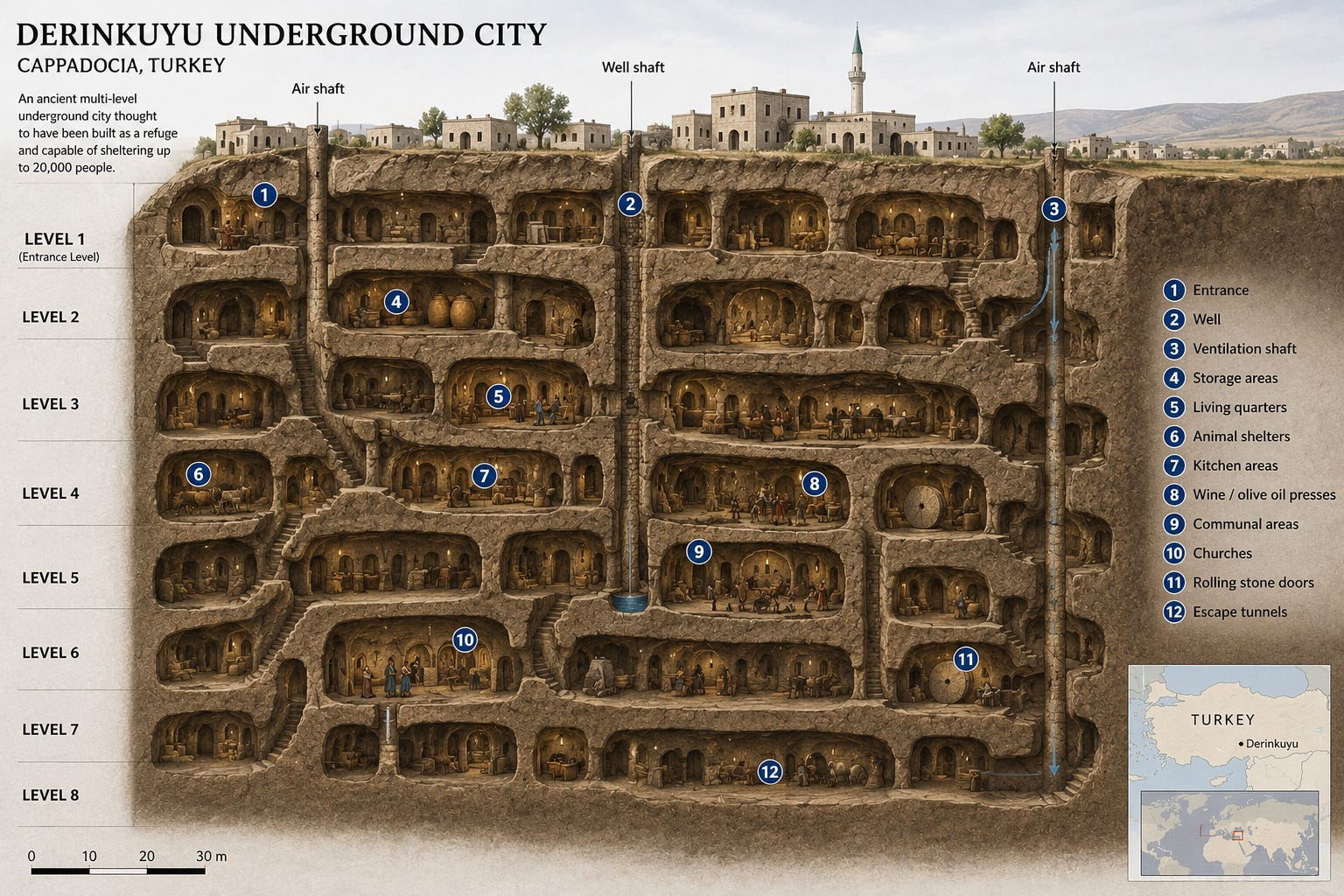
Places like Derinkuyu were not simply caves that people happened to occupy. They were environments that had been deliberately engineered to support human life. Ventilation shafts carried fresh air deep underground. Wells provided access to water. Storage chambers preserved food supplies. Livestock could be housed within the complex, and enormous stone doors allowed entire sections of the city to be sealed when necessary.
The builders were not adapting themselves to the cave.
They were adapting the cave to themselves.
That distinction may prove more important than it first appears.
If another branch of humanity really did spend centuries, or even millennia, beneath the surface, I suspect much of its development would follow the same principle. The solution to darkness would not be larger eyes but better lighting. The solution to poor airflow would not be biological adaptation but more sophisticated ventilation systems. The solution to food scarcity would not be smaller stomachs but increasingly efficient methods of producing food.
This perspective leads to an interesting possibility. An underground civilisation might remain surprisingly recognisable, even after spending enormous periods of time in a radically different environment. The greatest changes may not occur within the people themselves, but within the systems that surround them.
Their technology, infrastructure and methods of organising resources could evolve dramatically while the inhabitants remain, in many respects, fundamentally human.
If that is true, then understanding such a civilisation means understanding the systems on which it depends.
Viewed through that lens, places like Derinkuyu begin to look different. They feel less like shelters built in response to danger and more like early attempts to create something far more ambitious: a self-sustaining world beneath the surface.
And once you begin looking at underground cities that way, an even more interesting question emerges.
How would such a world actually function over the long term?
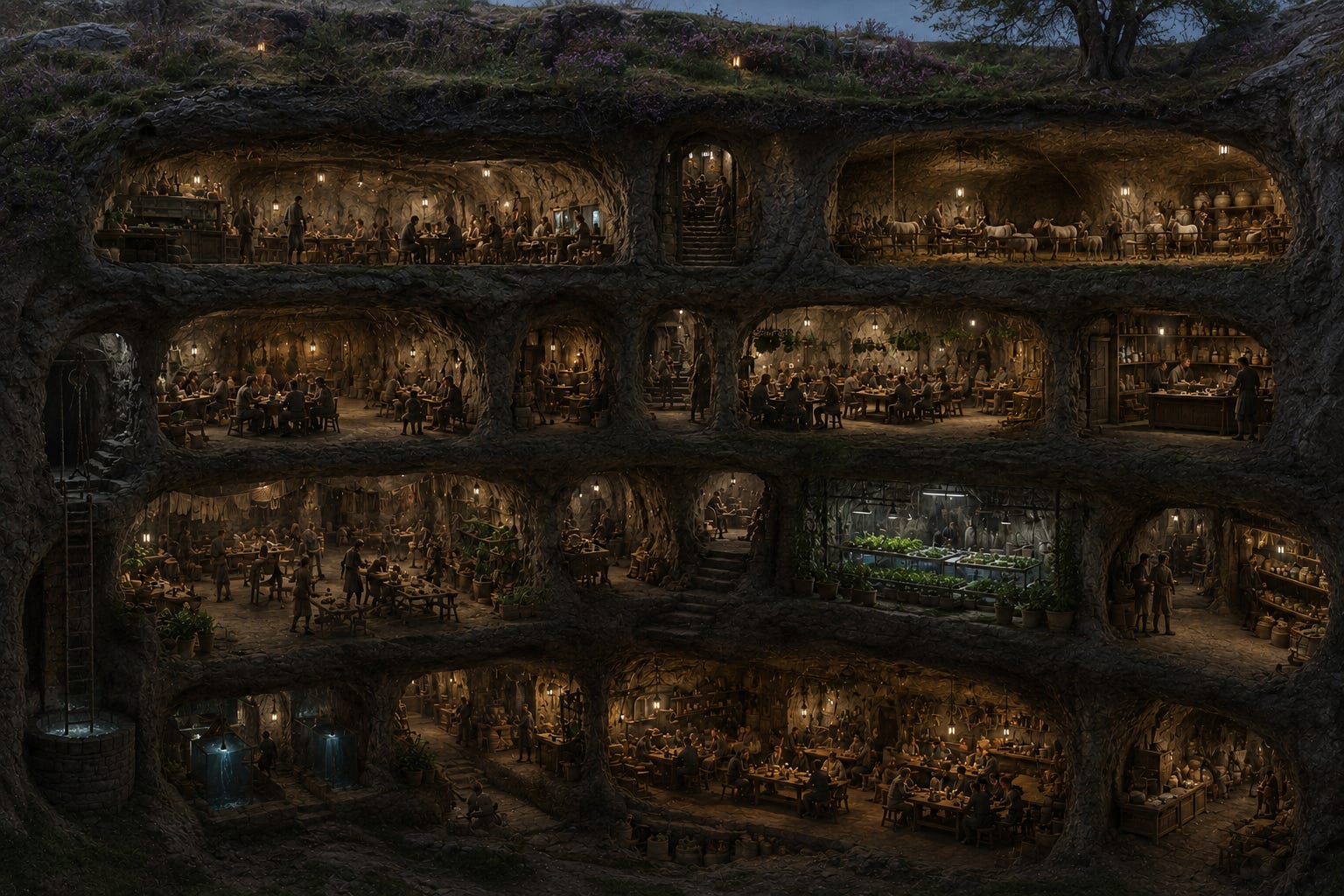
The Underground System
Once I started thinking about underground civilisation as a systems problem rather than a survival problem, I found myself looking at places like Derinkuyu in a completely different way.
Most discussions focus on questions such as who built these cities, when they were constructed or why they were used. Those are fascinating subjects in their own right, but they were not what captured my attention. What interested me was the design.
The deeper I looked, the less these places resembled natural caves and the more they resembled engineered environments. Every major feature appeared to exist for a reason. Every element seemed to solve a specific problem.
Derinkuyu extends through multiple levels beneath the surface. Ventilation shafts carry fresh air deep into the complex. Wells provide access to water. There are storage areas for food, spaces for livestock and enormous circular stone doors capable of sealing sections of the city from one another. Even without attaching any speculative interpretation to the site, the scale of the achievement is difficult to ignore.
The people who created these spaces were confronting many of the same challenges that any long-term underground population would eventually face. How do you provide fresh air for large numbers of people? How do you secure a reliable water supply? How do you store food for extended periods? How do you protect critical areas of the settlement? How do you contain problems before they spread through the entire system?
The massive stone doors are particularly interesting in this regard. Most people assume they existed solely for defence, and that may well be true. Yet once a settlement reaches a certain size, there are many other reasons why compartmentalisation becomes valuable. A disease outbreak, a fire, structural damage or contamination of a critical resource can all threaten the wider population. The ability to isolate one section of a settlement from another suddenly becomes a matter of survival.
The same pattern appears throughout the city. The wells solve one problem. The ventilation shafts solve another. Storage areas address a different challenge, while livestock chambers solve yet another. Viewed individually, these features seem straightforward. Viewed together, they begin to resemble something much larger.
They resemble a system designed to keep people alive.
This is why I think it is important not to become overly distracted by the question of whether Derinkuyu was intended as a temporary refuge or a permanent settlement. We simply do not know enough about its earliest history to answer that question with confidence. What we do know is that people were thinking seriously about long-term underground survival. The evidence is carved directly into the walls.
The more interesting question is what happens next.
Imagine a population living within a system like this for generations. Then centuries. Then longer still.
The first challenge is keeping the system operational. The second is improving it.
Ventilation can become more effective. Water access can become more reliable. Food production can become more efficient. Living conditions can become more comfortable. New sources of energy can be developed. A civilisation that spends centuries underground would almost certainly become better at extracting value from limited resources because it would have little choice.
Yet the process never truly ends because the underlying constraints never disappear. Every improvement solves a problem, but it also creates new dependencies that must be maintained. Better systems allow larger populations. Larger populations place greater demands on those systems. Success creates new challenges rather than removing them entirely.
Every civilisation is shaped by the problems it spends the most time solving. Agricultural societies become experts in farming. Maritime societies become experts in navigation and trade. A civilisation living underground would spend an extraordinary amount of time thinking about air, water, food, waste management and the efficient use of space.
Over generations, these concerns would become more than practical necessities. They would shape culture, priorities and perhaps even the way people think about the world itself.
And that raises another question.
What happens when a system begins to approach its limits?
Living Within Limits
One of the advantages of living on the surface is that many limits feel temporary.
If a town becomes overcrowded, people move elsewhere. If food production needs to increase, additional land can often be cultivated. If a settlement outgrows its original boundaries, it expands. Human history is, in many ways, the story of populations responding to pressure by moving outward.
An underground civilisation would face a very different reality.
Every system would have a carrying capacity. Water supplies could only support a certain number of people. Ventilation systems could circulate only so much air. Food production could generate only so many calories. Living space could accommodate only so many inhabitants. At some point, every critical system would encounter a limit.
That does not necessarily mean growth becomes impossible. It means growth becomes increasingly expensive.
Imagine a community that decides it needs more living space. On the surface, that might mean constructing a new neighbourhood on the edge of town. Underground, the problem becomes far more complex.
New chambers must be excavated, but excavation itself creates challenges. Every tonne of rock removed has to go somewhere. It must be transported, stored, repurposed or disposed of without disrupting the rest of the settlement. The newly created space then requires ventilation, lighting, maintenance and access routes. What initially appears to be a simple expansion quickly becomes an engineering project that ripples throughout the entire system.
Growth remains possible, but it is no longer free. Every additional cubic metre of space creates new demands elsewhere.
The same pattern appears almost everywhere.
More food production requires additional growing space. More growing space requires more water, more labour and more energy. Improved living conditions support larger populations, but larger populations consume more resources. Better systems create new opportunities, yet those opportunities generate new demands.
Problems are rarely eliminated.
They are transformed into different problems.
A civilisation living within a closed system would spend much of its existence balancing these competing pressures, constantly searching for ways to increase efficiency without creating vulnerabilities elsewhere.
This is one of the defining characteristics of a closed system.
The more I thought about it, the more I realised that an underground civilisation might become obsessed with efficiency in ways that are difficult for surface populations to fully appreciate. Water would be recycled. Waste would be recycled. Materials would be recycled. Space would be carefully planned and continuously optimised. Nothing could be taken for granted because everything would exist within clearly defined limits.
Life would become a continuous balancing act.
Every decision would involve trade-offs. Should more space be allocated to agriculture or housing? Should population growth be encouraged or should a larger safety margin be maintained? Should resources be consumed today to improve quality of life, or preserved for future generations? These are questions that surface societies have often been able to postpone or avoid through expansion. A civilisation living underground would have no choice but to confront them directly.
What’s particularly interesting is that this does not necessarily lead to stagnation. In fact, it may encourage the opposite.
When resources are abundant, inefficiency can survive for surprisingly long periods of time. When resources are constrained, inefficiency becomes dangerous. The constant pressure to do more with less would create a powerful incentive to improve systems wherever possible. Better agriculture. Better water management. Better medicine. Better engineering. Better ways of extracting value from limited resources.
Innovation would still occur, but its focus would be different.
Much of human technological history has been driven by expansion. New ships opened new trade routes. New vehicles expanded the reach of nations. New infrastructure connected distant regions. An underground civilisation would likely innovate for a different reason. Its greatest breakthroughs might emerge not from the desire to conquer new frontiers, but from the need to optimise existing ones.
The more I followed this line of reasoning, the more I found myself questioning whether the defining achievement of such a civilisation would be exploration at all.
Perhaps its greatest accomplishment would be stability.
Maintaining a complex society for centuries while living inside boundaries that could never fully disappear would be an extraordinary challenge. Success would not be measured by how far the civilisation expanded, but by how effectively it managed the constraints that surrounded it.
And sooner or later, those constraints would begin to affect something even more important than air, water, food or space.
They would begin to affect people themselves.
The Population Question
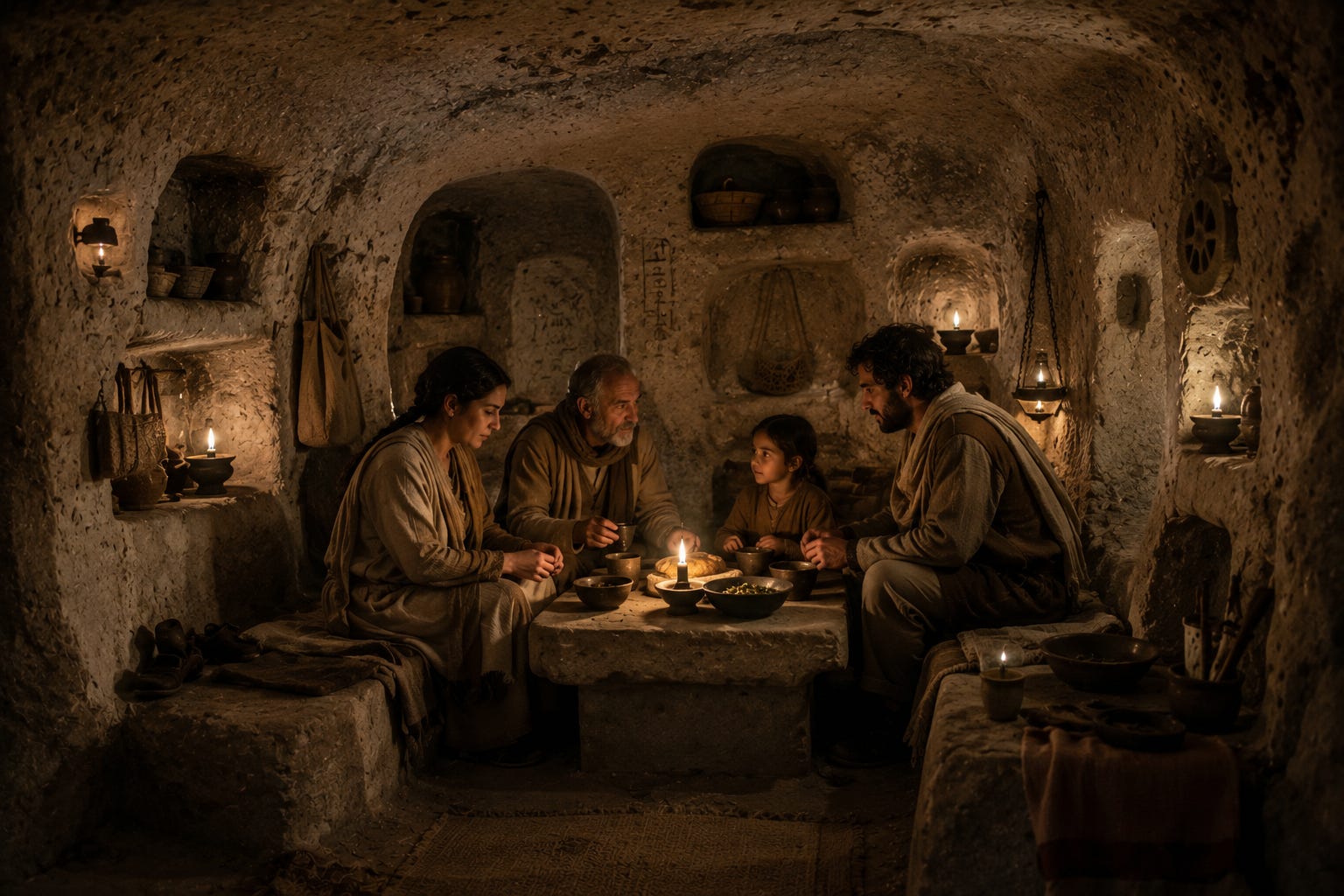
Of all the constraints facing a hidden civilisation, one would eventually rise above the others: population.
Water, food, air and living space are all different expressions of the same underlying question. How many people can the system support?
On the surface, that question is often difficult to answer because the system itself keeps changing. New land can be cultivated. New technologies can increase food production. Trade networks can import resources from elsewhere. Population pressure can be relieved through migration, expansion or economic growth. The limits still exist, but they are often distant, flexible and difficult to see.
An underground civilisation would have far fewer options.
Every additional person increases demand for food, water, air and space. Every birth creates obligations that may last for decades. Every new generation places pressure on systems already operating within defined limits. Population growth would still be possible, but it would become something to actively manage rather than simply accommodate.
That distinction changes the entire equation.
Imagine a settlement capable of comfortably supporting ten thousand people. At nine thousand inhabitants, there is still flexibility. Resources can absorb disruption. At nine thousand five hundred, that margin begins to shrink. By the time the population reaches ten thousand, even relatively minor problems can become serious threats. A failed harvest, a contaminated water supply, a disease outbreak or a structural failure becomes more dangerous when there is little room for error.
This creates an interesting paradox. The more successful the civilisation becomes, the more carefully it must think about growth.
A society that improves food production, water management and living conditions may eventually support far larger populations than its founders imagined. Yet every increase in population gradually consumes the safety margin those improvements created. Success solves one problem while quietly creating another.
The temptation would always be to use today’s surplus to support tomorrow’s growth. The risk is that tomorrow eventually arrives.
At some point, every civilisation operating within a closed system must decide whether growth remains the primary objective, or whether stability becomes more important.
That is where the assumptions of most modern societies begin to break down. We tend to associate growth with success. Larger populations can create larger economies, larger cities, greater influence and increased resilience. Economic systems are often built around the expectation of continued expansion. Growth is treated not merely as desirable, but as normal.
A civilisation living within strict physical limits might develop a very different philosophy. Its greatest achievement may not be expansion. Its greatest achievement may be balance.
The longer I considered this possibility, the more I found myself wondering whether such a civilisation would eventually develop a fundamentally different relationship with reproduction itself.
Not because children would be less valued. Quite the opposite.
Every child would represent a significant long-term investment by the entire system. Food must be produced. Space must be allocated. Resources must be managed. Education must be provided. The consequences of each birth would ripple through the civilisation for decades.
In many ways, children might become more valuable rather than less.
A society operating close to its carrying capacity could not afford to think about population casually. Every generation would shape the future of the system itself.
What begins as a discussion about population eventually becomes a discussion about risk, planning and long-term survival. How many people should there be? How quickly should the civilisation grow? How much spare capacity should be maintained? What level of risk is acceptable?
These are not merely demographic questions. They are questions about the future.
A civilisation can regulate population growth. It can improve resource management. It can optimise almost every aspect of its environment. It can become extraordinarily efficient at living within its limits.
What it cannot indefinitely escape are the consequences of remaining small and relatively isolated.
In a strange way, the very constraints that keep such a civilisation stable may also become one of the greatest threats to its long-term future. Sooner or later, the conversation stops being about resources, space or population.
It becomes about biology.
And once that happens, the next challenge begins to emerge.